
Bwindi Forest
Home
Bwindi Forest
- Recent Trips
Bwindi Forest
An In-depth Guide to Bwindi Impenetrable National Park
A Sanctuary of Ancient Biodiversity
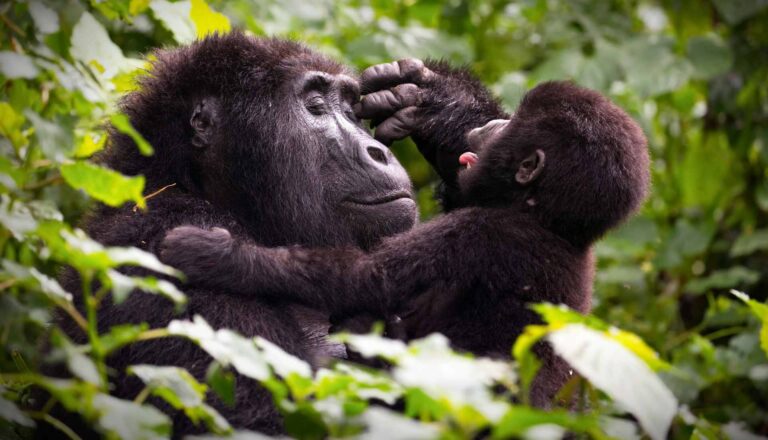
Bwindi Impenetrable National Park is globally celebrated as the primary habitat for the endangered mountain gorilla. This prehistoric forest is one of Africa’s most enduring ecosystems, having remained lush and intact since the last ice age, roughly 25,000 years ago. Today, it protects approximately 50% of the world’s remaining mountain gorilla population.
The park’s landscape is characterized by steep, rugged mountains. The altitude varies significantly, ranging from 1,447 meters to 2,607 meters above sea level, which supports a massive variety of life. Within its borders, you will find:
-
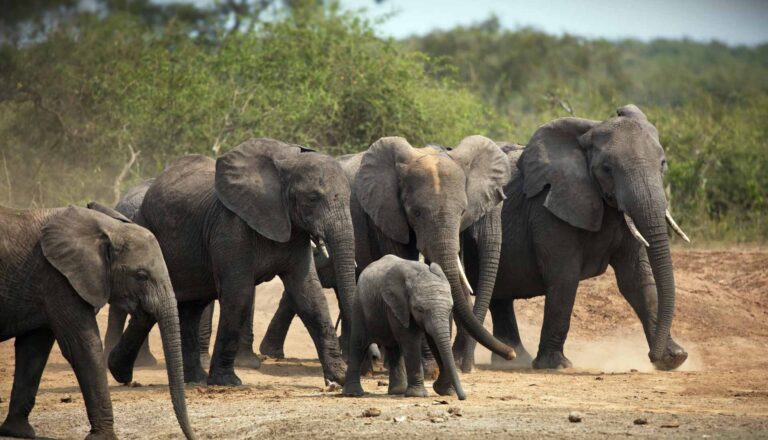
Mammals: 120 species, including forest elephants, chimpanzees, and various small antelopes.
-
Avian Life: 384 different bird species.
-
Insects: 202 species of butterflies.
-
Flora: A rich botanical mix of 400 plant species, 200 types of trees, and 100 varieties of ferns.
Geography and Regional Access
Situated in the southwestern corner of Uganda, the park sits on the rim of the Western Rift Valley. It is located roughly 530 kilometers from the capital city. Geographically, it is bordered by the Democratic Republic of Congo (DRC) to the west and the Kabale district to the southeast. Because of its size and terrain, the park is managed through four distinct tourism sectors.
The Four Trekking Regions
-
Buhoma Sector: This is the park’s northern hub and the most established area for tourism. It was the pioneer site for gorilla trekking in Uganda.
-
Resident Families: Mubare, Habinyanja, and Rushegura.
-
-
Nkuringo Sector: Found in the southern reaches of Bwindi near Buhoma, this sector is known for its stunning views.
-
Resident Families: Nkuringo, Bushaho, and Bikingi.
-
-
Ruhija Sector: Recognized as the most secluded region of the park. While it offers great trekking, it is most famous among birdwatchers.
-
Resident Families: Bitukura, Oruzongo, and Kyaguriro (Groups A & B).
-
-
Rushaga Sector: Located between Kabale and Nkuringo, this sector currently boasts the highest density of habituated gorilla groups.
-
Resident Families: Nshongi, Mishaya, Bweza, Kahungye, and Busingye.
-
Tourism Experiences and Activities
Gorilla Encounters
The "Gorilla Trekking" and "Habituation Experience" are the park's flagship activities. Because Bwindi houses half the world's mountain gorillas, sightings are nearly guaranteed (99% success rate). To protect the animals, a maximum of eight people may visit a specific gorilla family per day.
A Birdwatcher’s Haven
Bwindi is often cited as the top birding destination in Africa. It is common for enthusiasts to spot over 150 species in a single day. The park hosts 23 species that are endemic to the Albertine Rift. Notable sightings include the African Green Broadbill, Shelley’s Crimson-wing, Doherty’s Bush-shrike, and the Grey Crowned Crane.
Wildlife and Primate Watching
Beyond gorillas, the deep forest is a haven for primates like the Black and White Colobus, Red-tailed monkeys, and L’Hoest’s monkeys. Other wildlife sightings often include Giant Forest Hogs, Side-striped Jackals, and African Civets.
Cultural Immersion with the Batwa
The Batwa people were the original inhabitants of the Bwindi forest before it became a national park. Known as the "Keepers of the Forest," they lived as hunter-gatherers for generations. Visitors can participate in a Batwa cultural tour to see how they traditionally gathered food, hunted, and used medicinal plants, offering a rare look into an ancient way of life.
- Chimpanzee Tracking
- Rhino Tracking
- Batwa Cultural Interactions
- Game Drives
- Boat Cruises
- Bird Watching
- Zip Lining
- Hot Air Balloon Safari
- Maasai Cultural Interactions
- Safari Biking